CATEGORIES
TAGS
Unique podcast content ideas to stand out in 2026

TL;DR:
- Standing out in a crowded podcast market requires smart content structure and unique formats.
- Repurposing episodes into multiple assets amplifies reach, aided by AI tools for efficiency.
- Community involvement and authentic content build engagement, authority, and monetization opportunities.
There are over 4 million podcasts out there right now. Four million. So when you sit down to plan your next episode and realize your topic has been covered seventeen times this week alone, that frustration is completely valid. The good news? Standing out isn’t about being louder. It’s about being smarter with your content structure, your formats, and your audience relationship. This guide walks you through proven frameworks, creative segment ideas, and repurposing strategies that actually move the needle. Whether you’re a solo creator or running a branded show, you’ll leave with real ideas you can use immediately.
Table of Contents
- Frameworks for finding unique podcast content
- Top creative podcast formats and segment ideas
- Repurposing and reverse content strategies for maximum reach
- Leveraging community, contrasting views, and product discovery
- A fresh perspective: Why blending originality and structure wins
- Discover hundreds of podcast-driven product ideas
- Frequently asked questions
Key Takeaways
| Point | Details |
|---|---|
| Idea selection criteria | Blend niche specificity, format innovation, and audience relevance for best results. |
| Engagement formats | Roundtables, Q&A, and debate segments drive listener involvement and retention. |
| Repurposing workflow | Reverse planning and AI tools transform one episode into many valuable assets. |
| Community-driven segments | Listener input and contrasting guest views foster engagement and episode buzz. |
| Product discovery integration | Mentioning trending products connects commerce with content and benefits listeners. |
Frameworks for finding unique podcast content
Finding a great podcast idea isn’t just about brainstorming until something clicks. It’s about building a system that reliably surfaces ideas your audience actually wants. Let’s look at three frameworks that make that possible.
1. Niche specificity scoring Before committing to any topic, ask yourself: how specific is this, really? Buzzsprout lists 60 niche topics and 15 formats, including meta-podcasts where hosts discuss podcasting itself. The tighter the niche, the less competition and the stronger the listener loyalty. A show about “marketing” is forgettable. A show about “marketing for independent bookstores” is magnetic.
2. Topic architecture Think of your show as a house with load-bearing walls. Those walls are your three to five core themes. Every episode lives inside one of those rooms. Topic architecture and content strategy mechanics like this enable durable podcast growth because you’re never starting from zero. You always know where an episode belongs.
3. Audience pain point mapping This one is underused and wildly effective. Survey your listeners. Check Reddit threads in your niche. Mine your DMs. Real audience pain points become irresistible episode hooks.
Once you have a framework, apply it systematically. Think about niche podcast selection as an ongoing process, not a one-time decision. Your niche can evolve with your audience.
“Prioritize niche specificity and unique angles to stand out.”
Here’s a simple blueprint for generating segment ideas within any framework: start with a listener problem, translate it into a question, then build a segment format around answering that question in a surprising way. Not a standard interview. Not a listicle read aloud. Something that makes people stop what they’re doing and actually listen.
Pro Tip: Run a “content audit” every quarter. List your last 20 episodes and categorize them by theme. If one bucket is overflowing and another is empty, you’ve found your next batch of ideas.
Top creative podcast formats and segment ideas
With frameworks in place, let’s explore creative formats that set shows apart from the crowd.
Not all formats are created equal. Some pull in casual listeners. Others build a cult following. The key is matching the format to your audience’s lifestyle and attention span. Riverside documents over 100 creative podcast ideas including behind-the-scenes explorations and unique spins on pop culture. But here are the formats worth your attention right now:
- Roundtable debates: Three or more voices, one spicy topic. Controlled chaos that listeners love.
- Myth busting segments: Take a widely held belief in your niche and tear it apart with evidence.
- Success story breakdowns: Walk through one person’s win step by step, with real numbers.
- Listener mailbag: 45 segment ideas from Talks.co include quick-fire Q&A, listener mailbags, and expert hot seats, all of which build community fast.
- Contrasting perspectives: A scholar and a practitioner debate the same topic. The tension is the content.
Here’s a quick comparison to help you choose:
| Format | Engagement potential | Best used for |
|---|---|---|
| Roundtable | High | Niche communities, thought leadership |
| Myth busting | Very high | Education, authority building |
| Listener mailbag | Medium-high | Community shows, personality-driven pods |
| Expert hot seat | High | Industry-specific audiences |
| Success story | High | Business, wellness, personal development |
Format variety keeps your feed from going stale. But here’s what most creators miss: the transition between segments matters as much as the segment itself. A clunky handoff kills momentum. Practice smooth pivots.
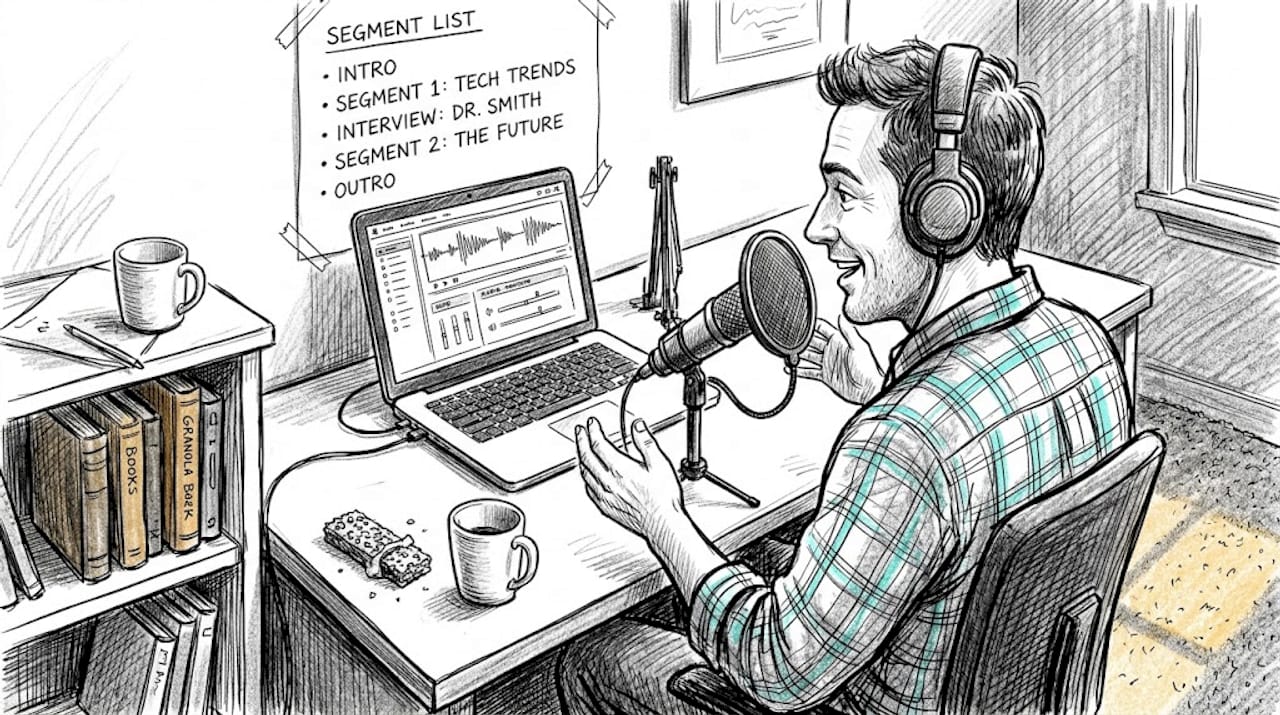
Pro Tip: Repurpose segments into multiple shorter assets. A five-minute myth busting segment becomes a YouTube Short, a LinkedIn carousel, and an email newsletter intro. One recording, four touchpoints. That’s how you build engagement formats that scale.
Repurposing and reverse content strategies for maximum reach
Creating one great episode is an accomplishment. Turning that episode into ten pieces of content is a strategy.
Most podcasters think about repurposing after they record. Flip that. The reverse content strategy means you plan the episode backward from its most shareable clip. What’s the three-second hook? What’s the pull quote? What visual would stop someone mid-scroll? Answer those first, then build the episode around them.
Repurposing one episode into 10+ assets can multiply your reach six to ten times. Here’s what that looks like in practice:
- Full episode audio (the source)
- Audiogram clip for social media
- Long-form blog post expanding on the main argument
- Email newsletter pulling out the three best insights
- Twitter/X thread summarizing key points
- LinkedIn article targeting professional audience
- Short-form video for YouTube, Instagram Reels, or TikTok
- Quote graphic for Pinterest or Instagram Stories
- Community post asking a question from the episode
- A follow-up episode responding to listener reactions
That’s ten assets from one recording session. The math is simple. The discipline required to actually execute it is less simple, but AI tools make it way more manageable.
| Asset type | Reach multiplier |
|---|---|
| Full episode | 1x |
| Social clips (2-3) | 2-4x |
| Blog post | 3-5x |
| Email newsletter | 2-3x |
| Short-form video | 4-6x |
| Community content | 2-3x |
In 2026, the top AI tools for podcasting include Podsqueeze, Sonix, Otter, Ausha, and Capsho, all of which automate repurposing workflows like transcription, clip selection, and show note generation. These aren’t optional extras anymore. They’re table stakes for anyone serious about growth.
AI tools for repurposing and SEO like PodSEO, Surfer, and Rank Math also help your content rank in search, meaning your episode lives on long after the launch week buzz fades.
Pro Tip: Record a brief “content brief” at the start of every recording session. Out loud, name the top clip, the pull quote, and the blog angle. You’ll thank yourself during the editing phase.
Leveraging community, contrasting views, and product discovery
The most memorable podcasts don’t just talk at their audience. They talk with them. Community-driven content is the secret weapon most hosts underestimate.
Here’s what audience-powered segments look like in practice:
- Listener mailbag: Read and respond to real questions, stories, or hot takes from your audience.
- Scholar vs. practitioner debates: Invite an academic and an industry veteran to disagree on camera (or mic). The tension is the entertainment.
- Collaboration call-outs: Ask your audience to contribute case studies, experiences, or questions that shape your next episode topic.
- Community-chosen topics: Community-driven ideas outperform solo brainstorming, and shows built around listener input report stronger retention and word-of-mouth growth.
Video is no longer a nice-to-have. 53% of new podcast listeners now expect video alongside audio. If you’re audio-only, you’re narrowing your pool of potential fans before they even find you.
“Contrasting views create tension and engagement.”
Then there’s product discovery. This is where podcasts quietly become powerful marketing engines. When hosts mention tools, books, supplements, or gadgets naturally in conversation, listeners pay attention in a way they never do with ads. Niche B2B podcast CPM rates run $40 to $80, meaning even a mid-size show can generate serious affiliate revenue when product mentions are integrated thoughtfully.
That’s where data-driven audience insights and product discovery in podcasts tools come in. Instead of guessing what your audience wants to buy, you can see exactly what products are trending across thousands of episodes in your niche. That’s a massive edge.
A fresh perspective: Why blending originality and structure wins
Here’s something the “podcast growth” content rarely says out loud: copying trending formats is a trap. You see a show blow up with a particular style, you replicate it, and you wonder why you’re not getting the same traction. The answer is timing and context. That format worked for them, in their moment, with their audience.
What actually builds a durable show is a signature segment that only you could do. Something rooted in your specific expertise, your community’s quirks, or your personal experience. Use the frameworks in this article as a canvas, not a blueprint. Fill them with your own voice.
We also believe that listener engagement strategies need to be earned, not engineered. When you build segments around real listener needs and genuine conversation, you don’t have to chase engagement. It shows up.
Repurposing is also more than a distribution tactic. Think of content repurposing as a creative feedback loop. When you clip an episode, you see which moments landed. That tells you exactly what to do more of next time.
Discover hundreds of podcast-driven product ideas
If this guide sparked ideas about what your podcast could become, imagine having a tool that shows you exactly what products real audiences are already excited about across thousands of shows.

Prodcast analyzes podcast transcripts at scale, surfacing the tools, books, gadgets, and brands that creators and guests are actually recommending. You can browse products featured in podcasts by category, niche, or trend, and see what’s gaining momentum before it peaks. Want a concrete example? Check out Mass Persuasion, a product that’s been making the rounds in marketing and business podcasts. This is what turning audio conversations into commerce looks like in practice.
Frequently asked questions
How can I find fresh podcast content ideas that fit my audience?
Use frameworks like topic architecture and segment blueprints focused on your audience’s specific interests and problems, then audit your existing content quarterly to spot gaps.
What are the best ways to repurpose podcast episodes?
Turn each episode into clips, blog posts, newsletters, and social content. Repurposing into 10+ assets multiplies your reach six to ten times, and AI tools like Podsqueeze and Otter automate the heaviest parts of that process.
What formats can boost podcast listener engagement?
Try roundtable discussions, quick-fire Q&A, myth busting, and contrasting views formats. 45 podcast segment ideas from Talks.co include mailbags, debates, and expert hot seats, all of which consistently drive stronger listener interaction.
How does podcast product discovery work for marketers?
Product mentions in episodes can be tracked and auto-linked via affiliate tools, driving measurable conversions. Niche B2B CPM benchmarks of $40 to $80 show just how valuable a well-placed product mention in a targeted show can be.