CATEGORIES
TAGS
Unlock audience growth with social proof in podcasting

TL;DR:
- Building visible social proof through reviews, ratings, and guest credibility is essential for podcast growth. These signals influence discoverability, trust, and listener engagement, with review volume and consistent milestones being especially impactful. Authentic host endorsements and strategic leverage of download data further solidify long-term audience loyalty and sponsorship success.
Great content alone doesn’t guarantee podcast growth. That might sting a little, but it’s true. The shows that break through aren’t always the most polished or deeply researched. They’re the ones that look popular before a new listener ever presses play. Ratings and reviews serve as key social proof in podcasting, influencing new listener choices by reducing perceived risk. Understanding how to build and use that visible trust is the real growth lever most podcasters overlook.
Table of Contents
- What is social proof in podcasting?
- Why ratings and reviews drive discovery
- Host endorsements and their powerful influence
- Benchmarking credibility: Downloads, rankings, and growth tactics
- Best practices: Amplifying and leveraging social proof
- What most podcasts get wrong about social proof
- Leverage social proof with Prodcast
- Frequently asked questions
Key Takeaways
| Point | Details |
|---|---|
| High-volume reviews win | Podcasts with more reviews gain greater discovery and audience trust than those with few, even at similar ratings. |
| Host recommendations convert | Podcast hosts drive listener purchases and brand trust at rates that rival journalists and outperform social influencers. |
| Visible download milestones | Download counts and rankings serve as proof points signaling credibility to both audiences and sponsors. |
| Authenticity beats incentives | Genuine review requests and authentic host endorsements have more impact than generic or overly incentivized asks. |
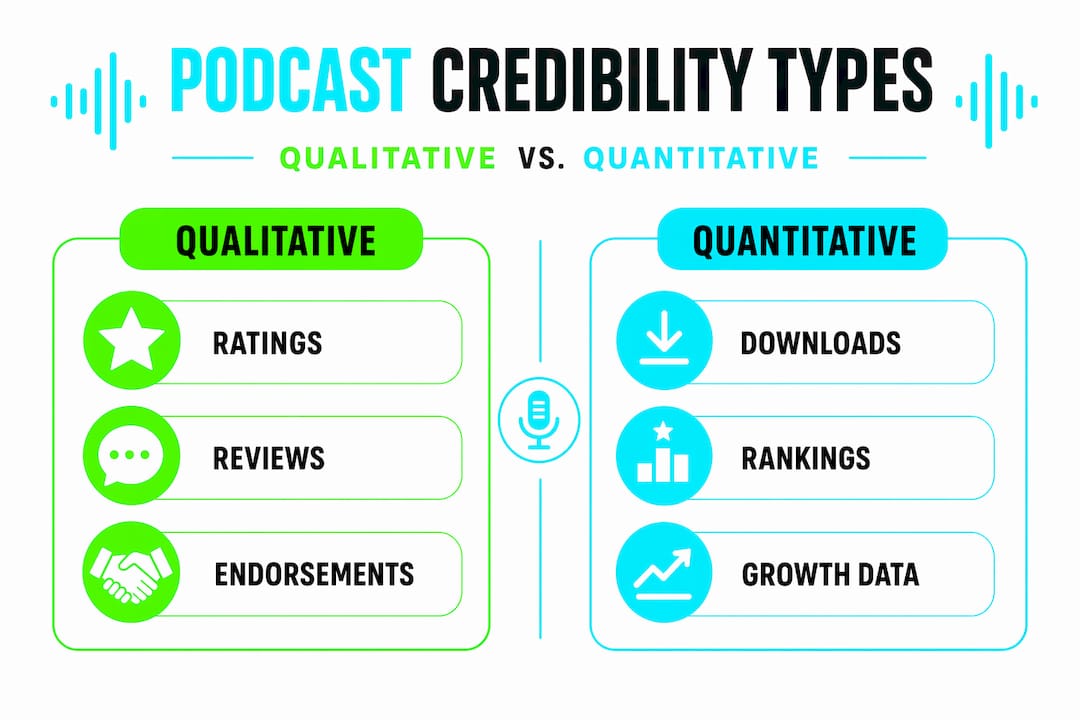
| Mix qualitative and quantitative cues | A blend of ratings, listener stories, downloads, and expert guests delivers the strongest social proof in podcasting. |
What is social proof in podcasting?
To understand how social proof shifts audience perceptions, let’s clarify exactly what it means in the podcasting world.
Social proof is borrowed from psychology. It’s the idea that people look to others’ behavior when making their own decisions. In podcasting, that translates to the signals a potential listener sees before they even hit play. A wall of glowing reviews. A guest who’s a household name. A chart position in Apple Podcasts. These aren’t just vanity metrics. They’re trust signals that quietly tell a stranger, “other people like you already love this show.”
The mechanics of social proof in podcasting operate across several distinct channels:
- Ratings and reviews influence discoverability on platforms and reduce listener uncertainty
- Host credibility shapes how seriously an audience takes recommendations and product mentions
- Download metrics signal popularity and attract sponsors looking for reach
- Guest endorsements transfer credibility from a recognized name to your show
“Social proof isn’t about gaming the system. It’s about making the trust you’ve already earned visible to people who haven’t found you yet.”
Think about how you discover podcasts yourself. You probably glance at the star rating, skim a few reviews, and notice if the guest lineup includes anyone you recognize. That’s social proof at work, and it’s happening in seconds. Understanding podcast reviews and listener behavior can help you see just how much these signals shape your audience’s first impression and their decision to stick around.
Here’s a quick breakdown of social proof types and what they communicate to new listeners:
| Social proof type | What it signals | Primary impact |
|---|---|---|
| Star ratings | Overall satisfaction | First impression and click-through |
| Review volume | Popularity and longevity | Algorithmic visibility |
| Download numbers | Audience size | Sponsor attraction |
| Host endorsements | Personal credibility | Purchase behavior |
| Guest credentials | Authority and relevance | Trust and topic depth |
Each of these signals plays a different role, and the smartest podcasters learn to cultivate all of them intentionally.
Why ratings and reviews drive discovery
With social proof defined, the next step is understanding how ratings and reviews specifically shift listener engagement and podcast growth.
Here’s something that surprises a lot of creators. A podcast with 4.6 stars and 3,000 reviews will almost always outperform a podcast with a perfect 5.0 and only 12 reviews. Why? Because review volume matters more than perfect scores for algorithmic visibility and discovery. Platforms read volume as a signal of sustained engagement, not just a handful of loyal fans leaving five-star notes.
The numbers back this up. Ratings improve conversion by 5 to 15%, and top podcasts consistently show high ratings like 4.9 out of 5 paired with thousands of reviews, which correlates directly with top percentile rankings. That’s not coincidence. It’s social proof compounding over time.
Think of it this way. Reviews are less like report cards and more like foot traffic. A busy restaurant with a line out the door feels more trustworthy than an empty one with a handwritten “best in town” sign. Your review count is that line out the door.
Comparison of review impact by volume:
| Review count | Discovery impact | Perceived credibility |
|---|---|---|
| 0 to 10 | Minimal, near invisible | Very low for new listeners |
| 11 to 100 | Moderate, some visibility | Acceptable, still uncertain |
| 101 to 500 | Strong, improved ranking | Reliable, noteworthy |
| 500+ | High, consistent discovery | High trust, authoritative |
Pro Tip: Don’t just ask for reviews once. Build a recurring call to action at the most emotionally engaging moment of each episode. That’s usually right after a particularly valuable insight lands, when the listener is most likely to feel motivated to take action.
The key insight for marketers and podcasters here is that podcast advertising effectiveness is deeply tied to how trustworthy a show appears. Advertisers pay attention to review counts and ratings because they know listeners do too.
Host endorsements and their powerful influence
Going beyond audience reviews, host endorsements deliver social proof that translates directly into listener action and loyalty.

Here’s a stat that should make every marketer sit up straight. 67% of listeners have made a purchase based on a podcast host’s recommendation, and podcast hosts rank equal to journalists in credibility at 33%. That’s not a small influence. That’s a purchasing engine built on trust.
What makes host endorsements so uniquely powerful? It’s the intimacy of the format. Podcasting is an audio medium that people consume while driving, working out, or making dinner. The host’s voice is literally in your ear, week after week. That kind of repeated, close-range exposure builds a relationship that no banner ad or social post can replicate.
Key reasons why host-read ads outperform other ad formats:
- Authenticity matters. Listeners can tell when a host actually uses a product versus reading a script cold. Real experience translates into genuine enthusiasm, and listeners feel that.
- Context matters. A fitness host endorsing a protein powder makes sense. That same host endorsing a tax software feels off. Relevance amplifies trust.
- Recall is exceptional. Host-read ads are trusted by 73% of listeners, and 71% unaided recall means listeners remember them without being prompted.
“When a host I’ve followed for two years tells me they genuinely love a product, that’s not an ad. That’s a recommendation from someone I trust.”
That kind of trust is rare in the marketing world. Social influencers can feel curated and distant. But a podcast host you’ve spent dozens of hours with? That’s a different relationship entirely. Brands that understand this are investing heavily in host-read formats for good reason.
Pro Tip: If you’re a podcaster running host-read ads, study host-read ad best practices around recording quality and delivery. A rough-sounding ad undercuts the trust you’ve worked hard to build, no matter how genuine your endorsement is.
For brands looking to boost awareness with podcasts, the host endorsement is arguably the most powerful tool in the whole podcasting ecosystem.
Benchmarking credibility: Downloads, rankings, and growth tactics
Ratings and recommendations show qualitative proof. Now let’s look at how quantitative data like downloads serve as additional trust signals for listeners.
Download counts are the invisible scoreboard of podcasting. Listeners may not always see them directly, but sponsors absolutely do, and platform algorithms use them as a key ranking signal. Here’s the thing about download benchmarks: they’re more achievable than most new podcasters think.
Download benchmarks for social proof thresholds break down like this:
| Percentile | Downloads per episode (first 7 days) | What it signals |
|---|---|---|
| Top 50% | 27+ | Average, but showing consistent audience |
| Top 25% | 126+ | Established show with real traction |
| Top 10% | 520+ | Strong performer, sponsor-attractive |
| Top 1% | 4,269+ | Industry-leading, high authority |
Most new shows don’t realize they’re already in the top 50% with just 27 downloads in their first week. That’s actually an encouraging benchmark. And for marketing for podcasts, knowing these thresholds helps you pitch to sponsors with confidence instead of guessing.
Here’s a numbered list of practical growth tactics that leverage download data as social proof:
- Publish your milestone moments. When you hit 10,000 total downloads or cross into the top 10%, announce it. Share it in your episode intro, on social, and in your show notes. Those numbers become proof.
- Pitch sponsors with context. Instead of just sharing raw download numbers, show the benchmark percentile. “Top 10% of all podcasts” lands better than “520 downloads per episode.”
- Create a press kit. A one-page media kit with your download stats, ratings, and review count turns your social proof into a document that closes sponsorship deals.
- Track episode-level performance. Some episodes dramatically outperform others. Lean into those topics and formats because they’re giving you data about what your audience genuinely wants.
- Use early momentum wisely. New shows build social proof fastest in their first 30 days. A concentrated push for reviews and listens during launch sets the algorithmic foundation for everything that follows.
Even low-volume but highly engaged niche audiences are genuinely valuable to the right sponsor. An audience of 500 devoted listeners in a specific vertical beats a passive audience of 5,000 any day.
Best practices: Amplifying and leveraging social proof
Once you know what social proof looks like, the key becomes amplifying it without losing authenticity or running afoul of audience trust.
Actively soliciting reviews via CTAs and displaying high-volume ratings prominently are foundational strategies. But execution matters. Generic asks like “leave us a review if you like the show” are easy to ignore. Specific, emotionally resonant asks are not.
Here’s what actually works:
- Make the ask personal. Tell listeners exactly why reviews matter to your show’s growth. People respond to transparency.
- Time it strategically. The moment right after an emotional high point in an episode is your best window.
- Display social proof prominently. Put your ratings and review highlights on your website, in your email newsletter, and in your episode descriptions.
- Feature credible guests intentionally. A guest with a strong existing audience or public reputation transfers some of that credibility to your show immediately.
- Collaborate with other podcasters. Cross-promotions are one of the fastest ways to borrow social proof from an established show.
Pro Tip: Never incentivize reviews with giveaways or gifts. Platforms flag this, listeners sense it, and it poisons the authenticity that makes reviews valuable in the first place. Instead, focus on audio content best practices to improve the actual listening experience, which naturally generates genuine reviews.
The biggest mistake we see? Ignoring negative reviews. A thoughtful, gracious public response to a critical review actually increases trust. It shows your audience that you’re listening and that you care about the experience you’re delivering.
For deeper strategies on podcast brand engagement, the through-line is always the same: authenticity scales better than any shortcut.
What most podcasts get wrong about social proof
Moving from advice to hard truths, it’s clear that mastering social proof requires looking beneath the obvious ratings and numbers.
Here’s the uncomfortable reality. Most podcasters treat social proof as a checklist. Get reviews. Boost downloads. Land a big guest. Check, check, check. But that approach misses the deeper dynamic that actually drives sustained growth.
Expert analysis shows that reviews aren’t the primary driver of search rankings. Behavioral signals like plays and follows from search matter more. What that means in practice is that the relationship you build with your audience, how often they finish episodes, how frequently they search for your show, and how many new listeners they tell about you, matters more than your star rating on a good week.
We also know from studying podcast growth trends that high-growth shows prioritize collaborations over social media and understand that social clips drive awareness indirectly rather than as a direct conversion tool. That’s a meaningful distinction. The clip works because it builds curiosity. The relationship closes the deal.
Podcasting builds deeper trust than social influencer marketing. That’s not an opinion. That’s an emerging consensus in the research. People follow social influencers. But they trust podcast hosts. That’s a fundamentally different emotional relationship, and it’s why podcast product discovery is growing as a serious commerce channel.
The takeaway? Build the relationship first. Let the metrics follow. Vanity proof is borrowed. Earned trust compounds.
Leverage social proof with Prodcast
If you’re serious about turning your podcast’s trust signals into measurable growth, Prodcast is built exactly for that.

Prodcast’s AI analyzes podcast transcripts at scale to surface the moments that matter most. Product recommendations, standout guest quotes, audience engagement spikes. With tools like Podcast Moments, you can spotlight the exact clips and endorsements that show your audience why your show is worth their time. And the Game Changers feature helps you identify and highlight the influential voices and products already gaining traction in your space. Whether you’re a podcaster building credibility or a marketer tracking what audiences are actually hearing, the Prodcast app turns audio conversations into structured, actionable proof.
Frequently asked questions
How many reviews does a podcast need to boost discovery?
Volume of reviews matters more than perfect scores, so podcasts with thousands of reviews consistently outperform those with fewer, even at similar star ratings. There’s no magic number, but crossing into the hundreds makes a meaningful difference.
Do host-read ads really influence listener purchases?
Yes. 67% of listeners have made a purchase based on a podcast host’s recommendation, making host endorsements one of the most effective conversion tools in audio marketing.
What download count signals podcast success?
Top 50% of podcasts reach 27+ downloads per episode within the first 7 days, while 4,269 or more downloads puts a show in the top 1% globally.
Which matters more: star rating or review count?
Review count beats perfect star ratings for discovery and growth. Platforms and listeners both respond more strongly to high volume than to a flawless score with minimal engagement.
How should new shows build social proof?
Request listener reviews early and often, showcase credible guests from your first episodes, and publish your milestone download numbers publicly to attract both new audiences and potential sponsors.